
When people think about cherry blossoms in Japan, Tokyo and Kyoto are usually the first places that come to mind.
But what if you arrive in Japan after the cherry blossoms have already finished blooming in Tokyo?
Don’t give up on sakura just yet.
Head north to Tohoku.
The Tohoku region in northeastern Japan is one of my favorite places to look for later-blooming cherry blossoms. Because spring arrives later in many parts of Tohoku, you can sometimes enjoy sakura several weeks after the season has finished in Tokyo.
And there is another big advantage: you can experience beautiful cherry blossom scenery without necessarily dealing with the crowds of Japan’s most famous hanami spots.
From historic castle towns and samurai districts to riverside cherry trees and enormous old sakura trees, Tohoku offers a completely different way to enjoy spring in Japan.
Why See Cherry Blossoms in Tohoku?
Japan’s cherry blossom season does not happen everywhere at the same time.
The cherry blossom front generally moves from south to north as spring progresses. In Tohoku, the season usually arrives later than in Tokyo, Kyoto, and Osaka.
For example, the average first bloom in Sendai is around early April, while Aomori’s average is later in April. Actual dates vary considerably from year to year, so always check the forecast before planning your trip.
This makes Tohoku particularly useful if you are traveling in Japan in mid- to late April and have already missed peak bloom in Tokyo.
But timing isn’t the only reason to visit.
Tohoku’s cherry blossom scenery is often combined with things you don’t get at the classic urban hanami spots:
- Historic castle towns
- Samurai residences
- Snow-capped mountains
- Traditional temples
- Rural landscapes
- Rivers and lakes
- Local festivals
- Hot springs
In other words, the journey to see the sakura can be part of the experience.
When Is the Cherry Blossom Season in Tohoku?
There is no single “Tohoku cherry blossom season.”
The region is large, and the timing changes depending on where you go.
As a general guide:
- Miyagi: late March to early April
- Fukushima: early to mid-April
- Iwate: mid-April
- Akita: mid- to late April
- Yamagata: mid- to late April
- Aomori: mid- to late April, sometimes into early May
These are only rough guidelines.
Weather can shift the season considerably from year to year. In 2026, for example, JNTO’s forecast showed Sendai beginning around March 31, Akita around April 6, and Aomori around April 13, with all three earlier than their historical averages.
So don’t book a trip based only on a typical date from a previous year.
Check the latest cherry blossom forecast before you travel.
The Best Cherry Blossom Spots in Tohoku
There are many beautiful places to see sakura across Tohoku. Here are some of the ones I would consider first.
1. Hirosaki Park, Aomori
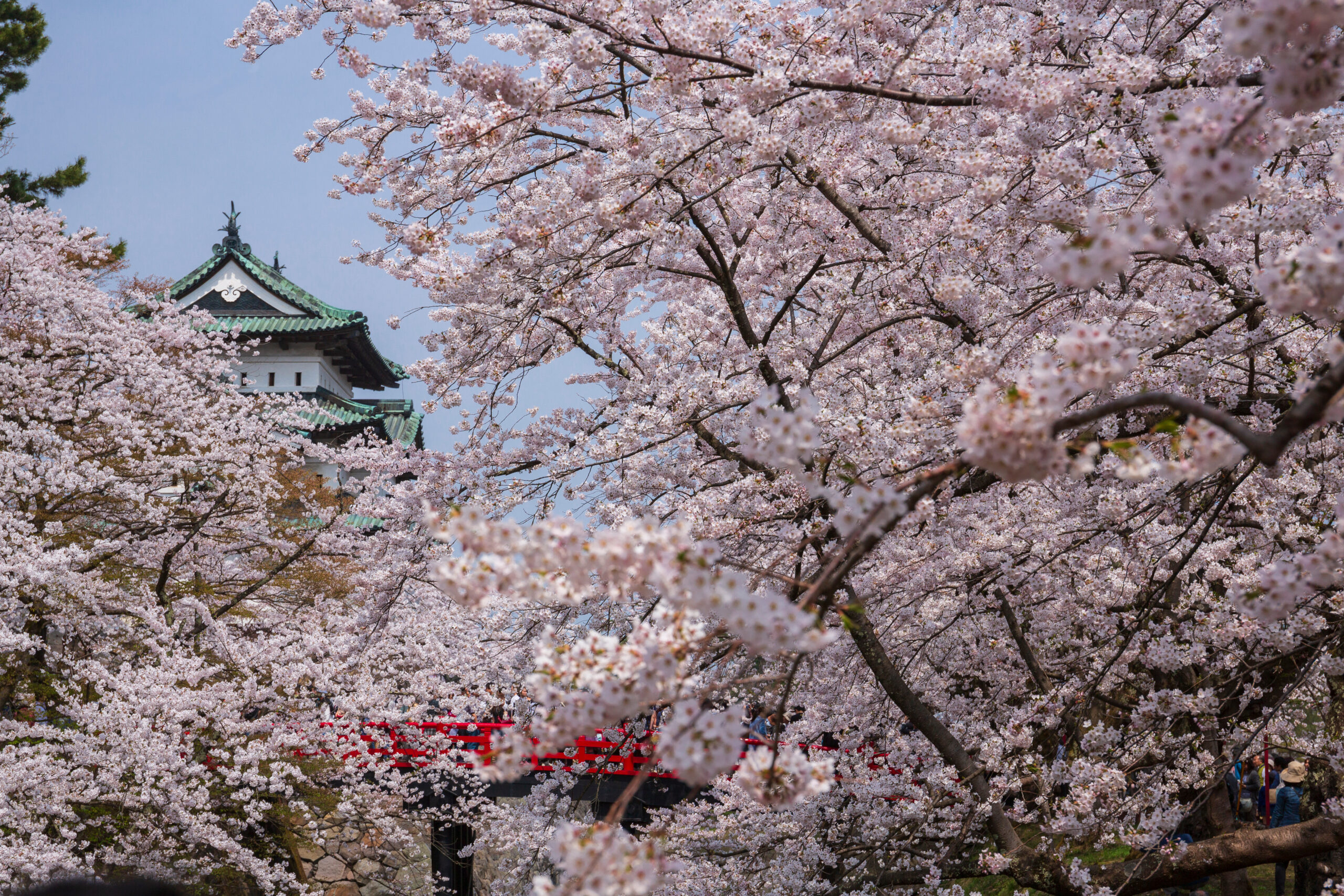
If you want one of the most spectacular cherry blossom experiences in Tohoku, Hirosaki Park should be near the top of your list.
Hirosaki is famous for its cherry blossoms, historic castle, moats, and beautifully maintained park.
The combination of pink blossoms, water, traditional architecture, and Hirosaki Castle creates a classic Japanese spring scene.
There are also nighttime illuminations during the Hirosaki Cherry Blossom Festival.
The park is particularly famous for its enormous number of cherry trees and old Somei-Yoshino trees, including one planted in 1882.
The typical season is around late April to early May, although the exact timing changes each year.
Best for: classic Japanese scenery, photography, castle lovers, and travelers who want a major sakura destination.
2. Kakunodate, Akita
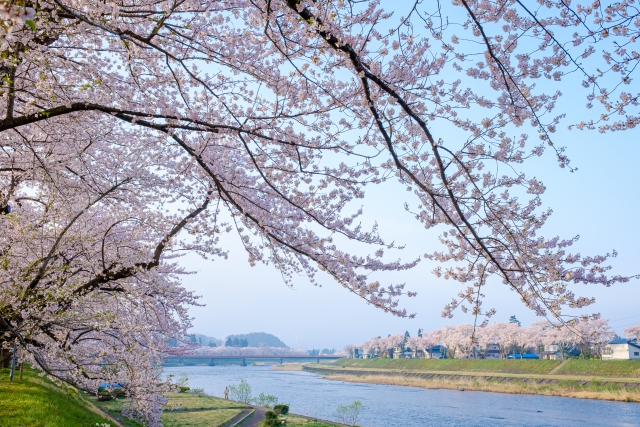
Kakunodate is one of my favorite choices for combining history and cherry blossoms.
This former castle town is famous for its beautifully preserved samurai district.
In spring, weeping cherry trees bloom around the traditional samurai residences, creating a beautiful contrast between the dark wooden buildings and pale pink flowers.
Nearby, the Hinokinai River is lined with around 400 Somei-Yoshino cherry trees stretching for approximately two kilometers.
So you can enjoy two very different types of sakura scenery in the same town:
samurai residences + weeping cherry trees
and
a long riverside cherry blossom avenue.
The cherry blossom season in Kakunodate is generally later than in Tokyo, and the Sakura Festival is held during the spring season.
Best for: history lovers, traditional Japanese scenery, photography, and travelers who want more than just a park full of cherry trees.
3. Kitakami Tenshochi, Iwate
Kitakami Tenshochi is one of Tohoku’s best-known cherry blossom destinations.
The park stretches along the Kitakami River and becomes covered in cherry blossoms in spring.
The annual Kitakami Tenshochi Cherry Blossom Festival is usually held from mid-April to early May.
JNTO describes it as one of the top three cherry blossom viewing spots in Tohoku, alongside Hirosaki and Kakunodate.
The riverside setting makes this spot particularly attractive if you want a spacious outdoor hanami experience rather than an urban park.
Best for: riverside scenery, spring walks, and travelers exploring Iwate.
4. Hanamiyama Park, Fukushima
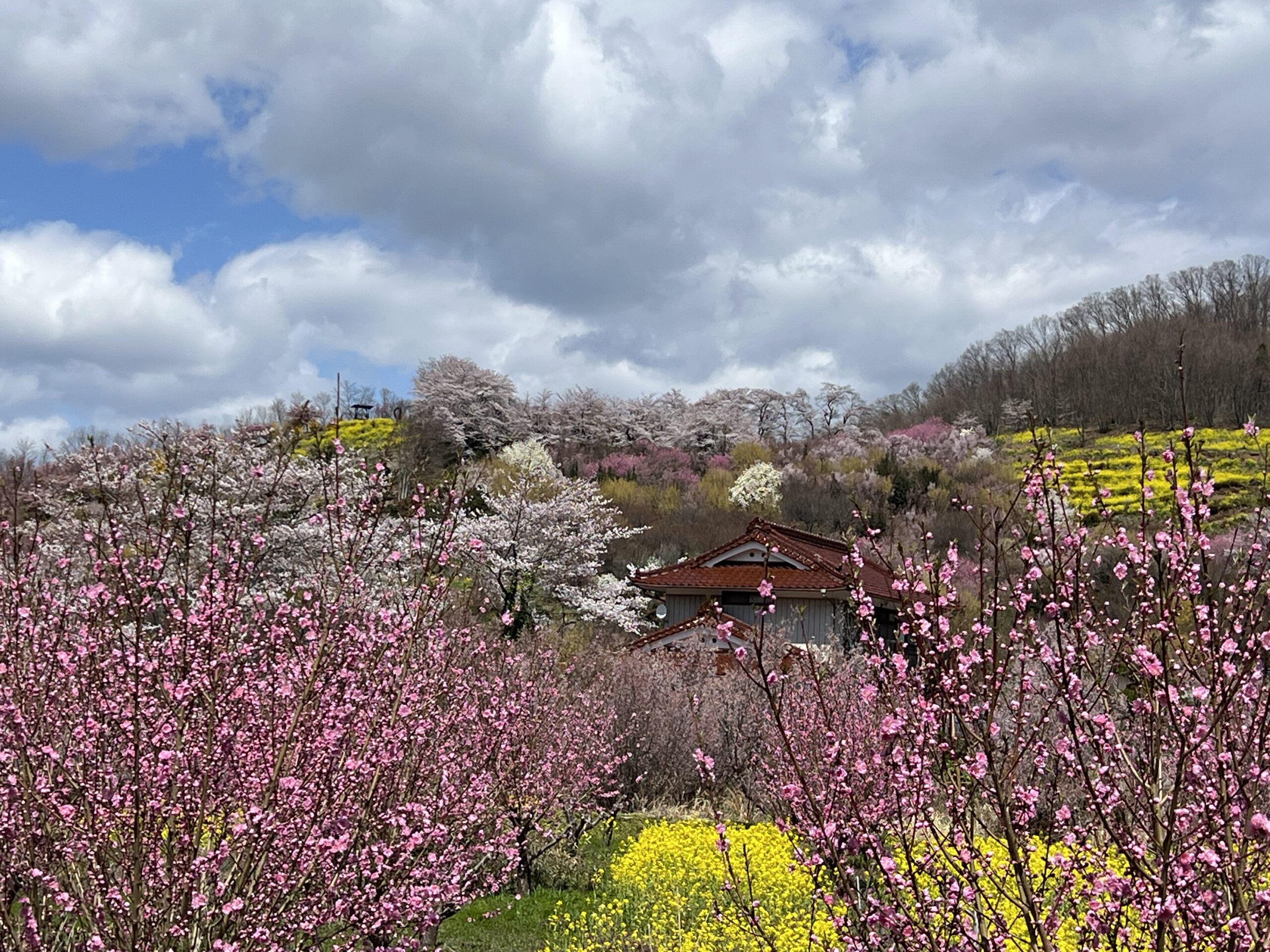
Hanamiyama Park is a little different from the other places on this list.
Rather than being a traditional urban park, Hanamiyama is a hillside area filled with many different kinds of flowers.
In spring, the landscape becomes a colorful mixture of blossoms, creating a scene that feels almost like a giant flower garden.
It is located about 15 minutes by bus from Fukushima Station during the flowering season.
The view is particularly beautiful because you are not simply looking at a row of cherry trees. The entire hillside becomes part of the scenery.
Best for: flower lovers, photography, and travelers looking for a different kind of spring landscape.
5. Miharu Takizakura, Fukushima
If you want to see something truly impressive, consider Miharu Takizakura.
The name means “Miharu waterfall cherry tree,” and the tree has been standing in Miharu for more than 1,000 years.
Its branches spread dramatically downward, creating the appearance of a waterfall made of cherry blossoms.
It is considered one of Japan’s most famous ancient cherry trees.
The tree is located in a rural area of Fukushima, and the small town receives a huge increase in visitors during the flowering season. JNTO notes that Miharu normally has a population of around 17,000 but attracts roughly 200,000 visitors to see the famous tree in spring.
Best for: spectacular individual trees, photography, and travelers interested in rural Japan.
Which Tohoku Sakura Spot Should You Choose?
If you don’t have time to visit several places, here’s how I would choose.
| If you want… | Consider… |
|---|---|
| A classic castle and sakura scene | Hirosaki |
| Samurai houses and cherry blossoms | Kakunodate |
| Riverside cherry blossoms | Kitakami Tenshochi |
| A colorful flower-covered hillside | Hanamiyama |
| A spectacular ancient tree | Miharu Takizakura |
| A later cherry blossom season | Aomori or Akita |
Of course, these are not your only options.
There are countless smaller parks, temple grounds, riversides, and neighborhood cherry trees throughout Tohoku.
And that is part of the fun.
Can You See Snow and Cherry Blossoms at the Same Time?
Yes.
This is one of the things I particularly love about spring in northern Japan.
Because Tohoku is colder than Tokyo and Kyoto, snow can remain in the mountains even after cherry blossoms begin blooming.
That means you may occasionally see a scene with:
cherry blossoms + fresh green leaves + snow-covered mountains
all at the same time.
It is one of those landscapes that reminds you just how geographically diverse Japan is.
If you are looking for a spring trip that feels different from the usual Tokyo–Kyoto cherry blossom experience, Tohoku is a great option.
How to Get to Tohoku from Tokyo
The easiest way to travel to Tohoku from Tokyo is usually by Shinkansen.
The Tohoku Shinkansen connects Tokyo with major cities including:
- Fukushima
- Sendai
- Morioka
- Shin-Aomori
From these cities, you can connect to local trains and buses to reach individual cherry blossom destinations.
For example:
Tokyo → Fukushima
is a convenient starting point for visiting Hanamiyama or Miharu.
Tokyo → Morioka → Kitakami
works well for visiting Kitakami Tenshochi.
Tokyo → Kakunodate
is particularly convenient because the Akita Shinkansen stops directly at Kakunodate Station.
For Hirosaki, you can take the Tohoku Shinkansen to Shin-Aomori and continue by local train to Hirosaki.
The best route depends on which places you want to visit, so I recommend choosing your cherry blossom spots first and then building your transportation plan around them.
A Tohoku Sakura Trip Doesn’t Have to Be Only About Sakura
This is one of the biggest advantages of traveling to Tohoku.
You don’t have to spend your entire trip chasing cherry blossoms.
You can combine hanami with:
- A stay in a traditional onsen
- Samurai history in Aizuwakamatsu
- Local food in Morioka
- Sendai sightseeing
- Yamadera in Yamagata
- Scenic train journeys
- Pokémon attractions
- Historic towns and temples
For example, you could spend a few days traveling through Tohoku by train, stopping at different towns as the cherry blossoms gradually bloom.
That makes the trip feel much more like traveling through Japan rather than simply visiting a list of famous sakura spots.
Tips for Planning a Tohoku Cherry Blossom Trip
Check the Forecast Frequently
Cherry blossom dates are notoriously difficult to predict far in advance.
Start checking several weeks before your trip and continue checking as your travel dates approach.
Travel North if You Miss the Peak
If the cherry blossoms have already finished in Tokyo, don’t assume the entire country is finished.
The cherry blossom season moves north, so places such as Akita and Aomori can still be in bloom later in April.
Book Accommodation Early
Popular cherry blossom destinations can still become very busy during peak bloom.
This is especially true for famous places such as Hirosaki and Kakunodate.
Don’t assume that a less famous destination automatically means empty hotels.
Don’t Try to Visit Too Many Places
Tohoku is huge.
It can be tempting to plan a trip that includes Aomori, Akita, Iwate, Miyagi, Yamagata, and Fukushima all in one go.
I wouldn’t recommend it unless you have plenty of time.
Choose a few destinations and enjoy them properly.
Bring Layers
Spring weather in Tohoku can be considerably cooler than Tokyo.
Even when the cherry blossoms are blooming, mornings and evenings can be cold.
Bring layers, especially if you plan to spend a lot of time outdoors.
Why I Recommend Tohoku for Cherry Blossoms
If your dream of Japan includes cherry blossoms, you don’t necessarily have to fight your way through the most famous spots in Tokyo or Kyoto.
Tohoku offers another option.
You can follow the cherry blossom season north, explore historic towns, eat local food, ride trains through the countryside, stay at hot springs, and see landscapes that feel very different from Japan’s major tourist cities.
And perhaps most importantly, you can turn a cherry blossom trip into a Tohoku trip.
That’s what I like about this region.
The sakura can be the reason you go.
But they don’t have to be the only reason you stay.
If you’ve already seen Tokyo and Kyoto in cherry blossom season, take a look north. Tohoku may show you a completely different side of spring in Japan.
More Tohoku Travel Guides
Planning a trip around northeastern Japan? I’m gradually adding more Tohoku guides to Japan Sprinkles.
Start here:
- Tohoku Travel Guide – An introduction to the region’s six prefectures, seasons, food, history, and travel ideas.
- Discover Sendai – Explore the largest city in Tohoku.
- The City of Morioka – Discover the relaxed local atmosphere and food of Iwate’s capital.
- Yamagata Travel Guide – Explore mountains, temples, hot springs, and local food.
- Pokémon in Tohoku – Find Pokémon-themed places across the region.
- The Pokémon With You Train – Take a unique train journey between Ichinoseki and Kesennuma.
I’ll keep adding more places and experiences as I explore and write about Tohoku.