
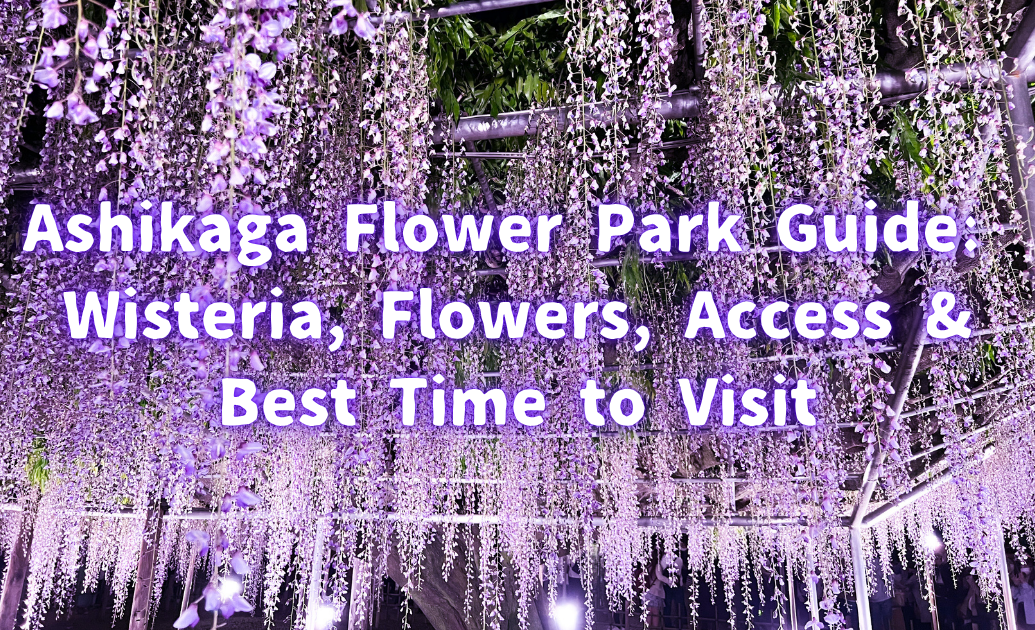
If you have ever seen photos of enormous purple wisteria hanging from beautiful flower trellises in Japan, there is a good chance they were taken at Ashikaga Flower Park in Tochigi Prefecture.
Ashikaga Flower Park is one of Japan’s most famous flower parks, especially during the spring wisteria season. Its enormous wisteria trees, colorful flower tunnels, and illuminated gardens attract visitors from Japan and around the world.
The park is also much more than a wisteria destination. Flowers bloom throughout the year, and the park is divided into several seasonal themes, including roses, summer flowers, autumn foliage, and winter illuminations.
Located within day-trip distance of Tokyo, Ashikaga Flower Park is an excellent destination if you want to see spectacular seasonal flowers outside the Tokyo area.
In this guide, I’ll explain the best time to visit Ashikaga Flower Park, what to see, how to get there from Tokyo, admission fees, and tips for avoiding the busiest times.
Why Visit Ashikaga Flower Park?
The biggest reason to visit Ashikaga Flower Park is, of course, its spectacular wisteria.
The park is famous for its enormous wisteria trees and beautiful wisteria trellises, including a particularly impressive great wisteria tree that is more than 160 years old.
There are also several different colors and varieties of wisteria, including:
- Purple wisteria
- Pale pink wisteria
- White wisteria
- Yellow wisteria
One of the highlights is the 80-meter-long white wisteria tunnel, which creates a completely different atmosphere from the purple wisteria gardens.
But there is an important point for first-time visitors:
You don’t have to visit Ashikaga Flower Park only during wisteria season.
Flowers bloom throughout the year, and the park’s scenery changes dramatically from season to season.
What Is Japanese Wisteria?

Japanese wisteria is called fuji (藤) in Japanese.
It is a flowering vine that grows over trellises, creating long clusters of flowers that hang down from above.
Wisteria has been admired in Japan for centuries. It even appears in Japanese literature and poetry dating back more than 1,000 years.
The color of wisteria flowers is called fuji-iro, literally “wisteria color,” in Japanese.
The combination of the flowers, traditional trellises, and the scent of the blossoms makes seeing wisteria in Japan a particularly memorable experience.
The Best Time to See Wisteria at Ashikaga Flower Park
The wisteria season is usually from mid-April to early May, although the exact timing changes from year to year depending on weather and temperatures.
The park’s 2026 Great Wisteria Festival is scheduled for April 11 through May 17, with opening hours and admission prices changing throughout the flowering period.
Different types of wisteria bloom at slightly different times, so visiting during the peak period does not necessarily mean every variety will be at exactly the same stage.
In 2026, the park’s flowering reports showed that some pale pink wisteria had already reached full bloom in mid-April, while the great wisteria and white wisteria reached peak bloom later in April.
For this reason, I strongly recommend checking the park’s official flowering information shortly before your visit.
What Wisteria Can You See?
Great Wisteria
The great wisteria is one of the park’s main attractions.
The enormous tree and its long flower clusters create the classic Ashikaga Flower Park scenery that you may have seen in photographs.
White Wisteria Tunnel
The white wisteria tunnel is another highlight.
Instead of purple flowers hanging from a large trellis, you walk underneath a tunnel covered with white flowers.
The 80-meter-long tunnel is particularly beautiful when the flowers are in full bloom.
Pale Pink Wisteria
Pale pink wisteria creates a softer and more unusual landscape.
Depending on the year, these flowers can reach peak bloom earlier than some of the other varieties.
Yellow Wisteria

Yellow wisteria provides a completely different color from the more familiar purple and white varieties.
If you visit during the peak season, try to see several different types rather than spending your entire visit around one famous tree.
Want to See More Spring Flowers Near Tokyo?
If you’re visiting Japan in spring and want to see another spectacular flower destination, consider Hitachi Seaside Park in Ibaraki.
The park is famous for its huge blue nemophila fields in spring and red kochia in autumn.
Read my Hitachi Seaside Park Guide
Ashikaga Flower Park at Night

One of the special things about Ashikaga Flower Park is that the scenery can change completely after sunset.
During the wisteria season, some areas are illuminated, allowing visitors to enjoy the flowers after dark.
Seeing the flowers during the day and then watching the park become illuminated in the evening gives you two very different experiences.
If you are visiting during the wisteria season, check the current evening admission and illumination schedule before your trip because the opening hours and prices change depending on the season and flowering conditions.
Ashikaga Flower Park Throughout the Year
Wisteria is the park’s biggest attraction, but it isn’t the only reason to visit.
Ashikaga Flower Park describes its year as several different floral seasons, with hundreds of types of flowering plants and trees changing the appearance of the park throughout the year.
Spring
Spring is the most famous season.
Depending on when you visit, you can see:
- Tulips
- Rhododendrons
- Wisteria
- Roses
The wisteria season in particular attracts large crowds.
Early Summer
After the wisteria season, roses and other flowers continue to bloom.
The park’s rose season is a good alternative if you want to visit when the crowds are generally different from the peak wisteria period.
Summer
The park continues to feature colorful flowers during the warmer months.
Summer is a quieter alternative to the famous spring season, although temperatures can be quite high.
Autumn
Autumn brings a different atmosphere to the park, with seasonal flowers and changing foliage.
If you prefer cooler weather and fewer visitors than during the major wisteria season, autumn can be an interesting time to visit.
Winter: Flower Fantasy Illumination
Winter is another particularly special time at Ashikaga Flower Park.
The Flower Fantasy illumination transforms the park into a large-scale garden of light.
The illumination usually runs from autumn through winter, although the exact dates and opening hours change each year.
For the 2026–2027 season, the event is scheduled to run from October 17, 2026, through February 14, 2027.
The winter experience is completely different from visiting for wisteria.
Instead of coming for flowers in the daytime, you are coming to enjoy the combination of lights, water, gardens, and seasonal displays after dark.
How to Get to Ashikaga Flower Park from Tokyo
The easiest option for many travelers is to take the train.
The park has its own station:
Ashikaga Flower Park Station on the JR Ryomo Line.
The station is very close to the park, making train travel particularly convenient during the busy flower seasons.
Option 1: Tokyo → Oyama → Ashikaga Flower Park
One common route is:
Tokyo Station
↓ JR Tohoku Shinkansen
Oyama Station
↓ JR Ryomo Line
Ashikaga Flower Park Station
The Shinkansen is the faster option between Tokyo and Oyama.
However, it is more expensive than taking regular JR trains.
Option 2: Tokyo → Oyama → Ashikaga Flower Park by Regular JR Trains
You can also travel from Tokyo to Oyama using regular JR trains and then transfer to the JR Ryomo Line.
This takes longer but costs less.
For budget-conscious travelers, this is worth considering.
From Ueno Station
If you are starting from Ueno, you can also travel on the JR Tohoku Line to Oyama and transfer to the JR Ryomo Line.
The park’s official access information specifically recommends transferring at Oyama when coming from JR Ueno.
Can You Use the JR TOKYO Wide Pass?
If you are visiting Japan and planning several trips around the Tokyo and surrounding area, the JR TOKYO Wide Pass may be worth considering.
Ashikaga Flower Park is in Tochigi Prefecture, and the route involves JR East services.
However, I would not recommend buying the pass solely for a round trip to Ashikaga Flower Park.
The value depends on your complete itinerary and how much eligible JR travel you plan to do during the pass’s validity period.
If you are planning several day trips from Tokyo, compare the total cost of your planned journeys with the current pass price before purchasing it.
This is especially useful if Ashikaga Flower Park is one stop on a larger three-day regional itinerary.
Admission Fees
One important thing to know about Ashikaga Flower Park is that the admission fee changes depending on the flowers and their condition.
There is no single fixed admission price throughout the year.
For 2026, the official price ranges include:
- January–March: ¥500–¥900 for adults
- April–May: ¥900–¥2,300 for adults
- June: ¥800–¥1,300 for adults
- July–December daytime: ¥400–¥800 for adults
Children aged 4 through elementary school generally pay a lower admission fee.
During the major wisteria season, the price is considerably higher because this is the park’s busiest and most popular period.
The exact admission fee can be determined according to the condition of the flowers, so check the official website shortly before your visit.
Check Ahikaga Flower Park Tickets on Trip.com
Opening Hours
Opening hours also change depending on the season.
During the regular period, the park is generally open from 10:00 AM to 5:00 PM, with last admission 30 minutes before closing.
During major flower events and the winter illumination, the park can remain open much later.
For example, during the 2026 wisteria festival, opening hours varied significantly depending on the date, with some peak periods extending from early morning until around 9:00 PM.
Always check the official schedule before you visit.
How Long Should You Spend at Ashikaga Flower Park?
I recommend allowing at least two hours for a normal visit.
If you are visiting during the wisteria season and want to take lots of photographs, eat at the park, shop for souvenirs, and see the illumination, you may want to spend considerably longer.
During the peak season, simply getting around can take more time because of the crowds.
If you arrive during the daytime and stay for the evening illumination, you can easily spend half a day or more here.
How Crowded Is Ashikaga Flower Park?
The wisteria season is extremely popular.
The biggest crowds usually occur when the wisteria is at or near its best, especially around Golden Week from late April to early May.
The park itself can become very crowded, and restaurants and the station can also be busy.
If your schedule is flexible, a weekday visit is generally more comfortable than visiting on a weekend or national holiday.
The park has also issued traffic warnings during the busiest Golden Week dates and recommends using public transportation during particularly crowded periods.
My Biggest Tip: Check the Flower Forecast
This is probably the most important piece of advice I can give you.
Don’t simply decide:
“I’ll visit on April 30 because wisteria is supposed to bloom in April.”
The flowering period changes every year.
Instead, check the official flowering report shortly before your trip.
For example, in 2026, unusually warm weather caused some wisteria to bloom more than a week earlier than the previous year.
If you can adjust your travel dates by even a few days, this can make a big difference.
What Can You Buy at Ashikaga Flower Park?
There are several shops inside the park.
The souvenir shop sells original Ashikaga Flower Park products, sweets, and local specialties.
You can also find plants, flowers, orchids, flower baskets, cacti, succulents, and other gardening-related products at the flower shop.
If you like Japanese souvenirs, this is a nice place to find something different from the typical Tokyo souvenirs.
Food at Ashikaga Flower Park
There are restaurants and cafes inside the park.
Restaurant Wisteria serves Japanese and Western dishes as well as drinks, and there are other food facilities within the park.
However, during the peak wisteria season, restaurants can become very crowded.
If you are visiting during Golden Week, be prepared to wait or consider eating outside the park.
Important Things to Know Before Visiting
Comfortable Shoes Are Essential
Even though the park is not enormous by Japanese theme-park standards, you will spend a lot of time walking and standing.
Wear comfortable shoes, especially during the busy spring season.
Charge Your IC Card Before You Go
The park’s official information specifically recommends making sure your transportation IC card has enough balance before leaving the park because the station can become extremely crowded after major events.
This is a small thing, but it can save you time when you are tired and ready to go back to Tokyo.
Public Transportation Is Better During Peak Season
There is a large free parking area, but traffic around the park can become extremely congested during the wisteria season.
If you are visiting during Golden Week or another peak period, I strongly recommend considering the train.
Is Ashikaga Flower Park Worth Visiting from Tokyo?
If you love flowers, photography, gardens, or seasonal scenery, Ashikaga Flower Park is an excellent day-trip option from Tokyo.
The wisteria season is undoubtedly the park’s biggest attraction, but I think it is a mistake to think of Ashikaga Flower Park as simply a “wisteria park.”
The scenery changes throughout the year, and the winter illumination offers an entirely different experience.
The fact that the park has its own JR station also makes it relatively easy to visit without renting a car.
If you are planning a trip around Tokyo and nearby prefectures, Ashikaga Flower Park can also be combined with other destinations in Tochigi or the northern Kanto region.
Final Thoughts
Ashikaga Flower Park is one of those places where photographs really don’t tell the whole story.
The scale of the wisteria, the long flower tunnels, the fragrance, and the way the flowers hang above you are much more impressive when you are actually standing underneath them.
If you want to see the famous wisteria, aim for mid-April to early May, but check the flowering forecast rather than relying on a fixed date.
And if your trip doesn’t coincide with wisteria season, don’t cross Ashikaga Flower Park off your list.
There are flowers throughout the year, and the autumn and winter illumination creates a completely different atmosphere.
For travelers based in Tokyo, it’s a surprisingly easy way to spend a day surrounded by flowers without traveling extremely far from the city.