
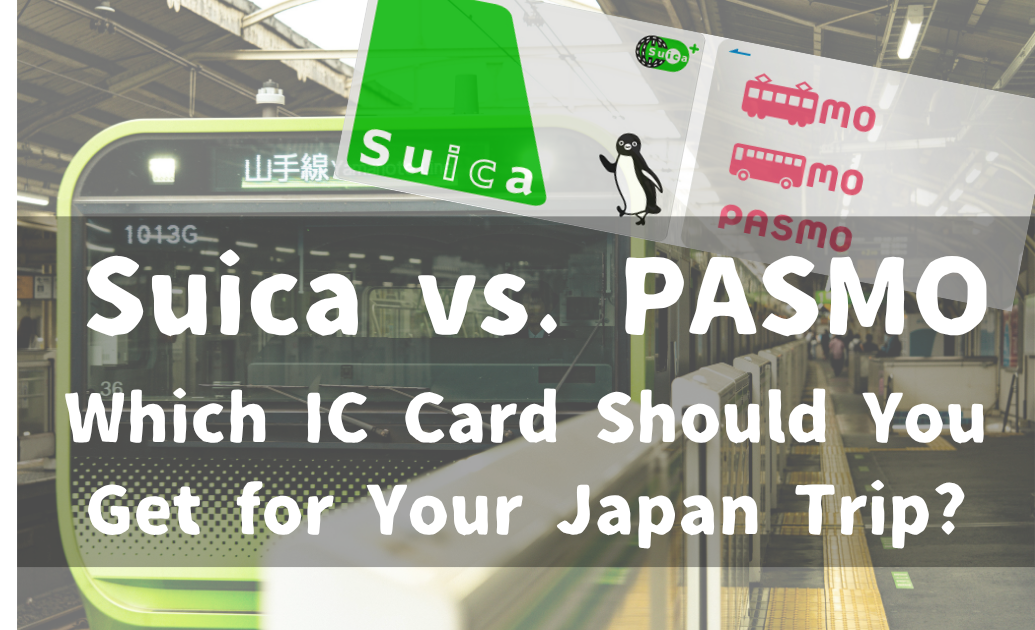
If you’re planning a trip to Japan, you’ve probably heard of Suica and PASMO. These rechargeable IC cards make traveling around Tokyo and other parts of Japan much easier. Instead of buying a ticket every time you take a train or bus, you can simply tap your card at the ticket gate and go.
But which one should you choose? Is Suica better than PASMO? Can you use them on your smartphone? And where can you get one?
Don’t worry! In this guide, I’ll explain the differences between Suica and PASMO, how to get one in 2026, and how to use it during your Japan trip.
Whether you’re visiting Tokyo for the first time or traveling around Japan, an IC card can make your journey much more convenient.
1. What Are Suica and PASMO?
Suica and PASMO are rechargeable contactless IC cards used for public transportation and electronic payments in Japan.
They were originally introduced by different railway companies, but today, they are widely accepted across many transportation networks.
Here are some of the things you can do with these cards:
- Take trains and subways without buying a paper ticket for each journey.
- Pay for buses that accept IC cards.
- Buy drinks from vending machines that support IC payments.
- Pay at convenience stores and other participating shops.
- Use them at certain coin lockers and other facilities.
The best part is that you usually don’t need to worry about which railway company operates the train. Suica and PASMO can be used across many interconnected IC card areas.
For most travelers visiting Tokyo, either card will work just fine.
2. Suica vs. PASMO: What’s the Difference?
Suica is issued by JR East, while PASMO is associated with Tokyo’s private railway, subway, and bus operators.
Although they have different origins, both cards are part of Japan’s nationwide interoperable IC card system.
Here’s a quick comparison:
| Feature | Suica | PASMO |
|---|---|---|
| Main issuer | JR East | PASMO Co. and participating operators |
| Used on Tokyo trains and subways | Yes | Yes |
| Used on many buses | Yes | Yes |
| Used for shopping | Yes | Yes |
| Mobile version | Yes | Yes |
| Special tourist version | Welcome Suica | Tourist PASMO options may be available |
So, which one is better?
For most tourists, there is no significant difference in everyday use. You can use either card on many of the same trains, subways, and buses in Tokyo.
If you already have a Suica, there’s generally no need to get a PASMO as well, and vice versa.
One important thing to remember is that nationwide IC card compatibility does not mean every train, bus, or region accepts every IC card. Some local transportation systems and services have their own rules.
3. How to Get a Suica or PASMO Card in 2026
There are several ways to get an IC card for your Japan trip. The best option depends on whether you prefer a physical card or a smartphone.
Option 1: Get a Regular Suica Card
Regular Suica cards are available again, so travelers no longer need to rely exclusively on special tourist cards or mobile versions.
You can generally purchase a standard Suica at designated JR East stations and ticket machines in the Suica service area.
A regular Suica is a good option if you want a reusable card without a short tourist-card validity period.
Where to get one:
- Designated JR East station ticket machines.
- JR East ticket offices and other designated sales locations, depending on the card type.
Availability and payment methods may vary by location, so check the official JR East website before purchasing.
Official website: JR East Suica
Option 2: Get a Regular PASMO Card
You can also purchase a regular PASMO card at designated stations operated by participating railway companies in the PASMO area.
This is convenient if you’re arriving at an airport or station served by a PASMO operator.
Like Suica, PASMO can be used on many trains, subways, buses, and participating shops.
Where to get one:
- Designated ticket machines at participating railway stations.
- Participating railway company ticket offices and other sales locations.
Not every station sells every type of PASMO card, so check the official website before you go.
Official website: PASMO
Option 3: Get a Welcome Suica Card
Welcome Suica is a special IC card designed for short-term visitors to Japan.
Unlike a regular Suica, it does not require a refundable deposit. However, it is valid for only 28 days from the date of purchase, and the remaining balance cannot be refunded.
This makes it useful for travelers who want a physical card without worrying about returning it at the end of their trip.
Where to get one:
Welcome Suica is sold at designated JR East locations, including selected stations and travel service centers. Availability can vary, so check the official website for current sales locations.
Official website: Welcome Suica
Option 4: Use Welcome Suica Mobile on Your iPhone
If you have an iPhone, Welcome Suica Mobile is another convenient option.
The app allows you to issue a Suica directly on your device and add money through Apple Pay.
You can then use your iPhone to tap through ticket gates and make payments at participating stores.
Main features:
- Issue a Suica on your iPhone.
- Add money through Apple Pay.
- Use it on compatible trains, buses, and at participating shops.
- Avoid carrying a separate physical IC card.
The app is designed for iOS devices. Availability and some functions may depend on your device, location, and payment setup.
Official website: Welcome Suica Mobile
4. Welcome Suica vs. Regular Suica: What’s the Difference?
If you’re considering a physical Suica card, you may wonder whether you should choose a regular Suica or Welcome Suica.
Here are the main differences:
| Feature | Regular Suica | Welcome Suica |
|---|---|---|
| Designed for | General users | Short-term visitors |
| Validity | Generally long-term, subject to inactivity rules | 28 days |
| Refundable deposit | Usually required | No deposit |
| Remaining balance refund | Subject to applicable rules | No refund |
| Reusable after your trip | Yes, subject to validity rules | No, expires after 28 days |
If you’re staying in Japan for an extended period or plan to return frequently, a regular Suica may be more suitable.
If you’re visiting for a short holiday, Welcome Suica can be a convenient choice.
5. Physical IC Cards vs. Mobile IC Cards
Should you carry a physical card or use your smartphone?
Both options are convenient, but they have different advantages.
Physical IC Cards
A physical card is a good choice if you don’t want to rely on your smartphone.
Advantages:
- No need to worry about your phone’s battery.
- Easy to use for travelers who prefer not to set up mobile payments.
- Can be used by travelers with compatible physical cards, regardless of smartphone type.
Things to keep in mind:
- You’ll need to recharge the card at a compatible machine or other supported location.
- You need to keep track of the physical card.
- Special tourist cards may have limited validity and refund options.
Mobile IC Cards
Mobile IC cards are convenient if you prefer to keep everything on your smartphone.
Advantages:
- No separate card to carry.
- Easy to check your balance and recharge.
- Convenient for frequent travelers and people who already use mobile payments.
Things to keep in mind:
- Your smartphone must be compatible with the service.
- Setup and payment methods may depend on your device and region.
- You should check your phone’s battery and mobile IC card settings before traveling.
For iPhone users, Welcome Suica Mobile is a useful option to consider.
Android users should check whether their device supports the relevant mobile IC card service. Not every overseas Android phone is compatible with Japan’s mobile IC card system.
6. How to Use Suica and PASMO in Japan
Once you have your card, using it is simple.
Taking Trains and Subways
- Make sure your card has enough balance.
- Touch the card or smartphone to the IC card reader at the ticket gate.
- Pass through the gate when it opens.
- At your destination, tap the same card or device again to exit.
The fare is generally deducted automatically.
You don’t need to calculate the fare or purchase a separate ticket for each ordinary journey within the supported IC card area.
Taking Buses
On buses that accept IC cards, you can pay by tapping your card on the designated reader.
The exact procedure depends on the bus company. Some buses require you to tap when boarding, while others require you to tap when getting off or both.
Look for the IC card logo or follow the instructions displayed on the bus.
Shopping with Your IC Card
Suica and PASMO can also be used as electronic money at participating stores.
You can use them at many convenience stores, vending machines, and other shops that display the appropriate IC payment logo.
Simply tell the cashier you want to pay with an IC card or tap your card on the reader when prompted.
7. How to Recharge Your IC Card
Recharging a Physical IC Card
If you’re using a physical Suica or PASMO card, you can recharge it at compatible ticket machines and designated charging locations.
Keep in mind that physical IC cards generally need to be recharged with cash. Credit cards are not usually accepted for topping up a physical card at station ticket machines.
Here’s how to recharge your card:
- Find a compatible ticket machine at a station.
- Select the charge option and place your card on the reader.
- Choose the amount you want to add.
- Insert cash and complete the transaction.
It’s a good idea to keep some Japanese yen in cash with you, especially if you plan to use a physical IC card throughout your trip.
8. Important Things to Know Before Using an IC Card
IC cards are convenient, but there are a few things worth knowing before you travel.
IC Cards Don’t Work Everywhere
Suica and PASMO are accepted across many transportation networks, but not every railway line, bus, or local transportation system supports them.
Some regional routes require paper tickets or other payment methods.
Also, if you travel between different IC card areas, you may need to purchase a separate ticket rather than simply tapping your card.
Always check the rules for your specific route, especially when traveling outside major metropolitan areas.
You Can’t Always Use an IC Card for Shinkansen Travel
An ordinary IC card balance is not a universal Shinkansen ticket.
Some Shinkansen services offer special IC card-linked ticketing systems, but these require the appropriate booking or registration.
If you’re planning to travel by Shinkansen, check the ticketing requirements for your route in advance.

Welcome Suica Has a Limited Validity Period
Welcome Suica is valid for 28 days from the date of purchase.
Any remaining balance cannot be refunded, so try to use it up before it expires.
Keep Your Card or Device Safe
If you use a physical card, keep it somewhere easy to access when passing through ticket gates.
If you use a smartphone, make sure it is properly set up for transit payments and that you understand how to use it when the screen is locked.
Can You Ride Trains by Tapping a Credit Card?
Yes! Contactless credit card payments are becoming available on more railway lines in Japan.
On participating train lines, you may be able to tap a compatible contactless credit card or smartphone at the ticket gate instead of using a Suica or PASMO card.
This can be especially convenient if you don’t want to purchase a separate IC card or recharge it during your trip.
However, contactless credit card payments are not available on every train line or at every station in Japan. Even within the same city, some railway operators and routes may support contactless payments while others do not.
Before relying on this payment method, check whether your route and the card you plan to use are supported.
If you’re traveling around Tokyo, a Suica or PASMO is still a convenient option for getting around on many different railway and bus networks.
9. What About Children? Do They Need Their Own IC Cards?
Children traveling in Japan may need a child IC card to receive the applicable child fare.
A child IC card is different from an ordinary adult card because the fare is calculated according to the child fare rules.
If you’re traveling with children, ask at a designated station ticket office about the requirements for purchasing a child card.
You may need to show a document confirming the child’s age.
Children who are eligible for free travel under the relevant railway company’s rules may not need a separate fare card for every journey.
Always check the rules of the transportation operator you’re using.
10. Which IC Card Should You Choose for Your Japan Trip?
The best choice depends on your travel style and the devices you use.
Here’s a simple guide:
Choose a regular Suica if:
- You want a reusable physical card.
- You plan to return to Japan in the future.
- You prefer a standard IC card without a short tourist-card validity period.
Choose a regular PASMO if:
- You prefer to purchase your card from a participating private railway operator.
- You want a reusable physical card for travel around Tokyo and other supported areas.
Choose Welcome Suica if:
- You’re visiting Japan for a short trip.
- You prefer a physical card without a refundable deposit.
- You understand that the card is valid for 28 days and the remaining balance cannot be refunded.
Choose Welcome Suica Mobile if:
- You have a compatible iPhone.
- You prefer to use your smartphone instead of carrying a physical card.
- You want to issue and recharge a Suica through an app.
For most tourists, either Suica or PASMO will work well for everyday travel around Tokyo.
The most important thing is to choose a card or mobile service that suits your trip and the devices you already use.
Frequently Asked Questions
Can I use Suica and PASMO interchangeably?
In many cases, yes. Both cards are accepted on a wide range of compatible trains, buses, and at participating stores.
However, not every service or transportation area supports both cards, so check the rules for your route.
Can I use Suica or PASMO outside Tokyo?
Yes. Both cards can be used in many other parts of Japan through the nationwide IC card compatibility system.
However, some local routes and transportation services do not accept them.
Can I use Suica or PASMO on my smartphone?
Yes. Mobile Suica and Mobile PASMO are available on compatible devices.
Welcome Suica Mobile is designed for iOS devices, while Android compatibility depends on the device and service.
Can I get a refund for the remaining balance?
Refund rules depend on the card type.
Regular Suica and PASMO cards may be refundable under the applicable conditions, while Welcome Suica does not offer refunds for the remaining balance.
Do I need both Suica and PASMO?
No. For most travelers, one compatible IC card is enough for everyday transportation and shopping.
Can I use an IC card for the Shinkansen?
Not automatically. Some Shinkansen services support special IC card-linked ticketing, but you need to follow the booking and registration requirements for the route.
Can I use a credit card instead of Suica or PASMO?
On some railway lines in Japan, you can use a compatible contactless credit card or smartphone to pay for your ride.
However, this service is not available everywhere. Check whether your railway operator and route support contactless credit card payments before traveling.
Can I recharge a physical Suica or PASMO with a credit card?
Physical IC cards generally need to be recharged with cash at ticket machines. If you prefer to recharge electronically, a compatible mobile IC card may be a more convenient option.
Final Thoughts
Suica and PASMO are two of the most convenient ways to get around Tokyo and many other parts of Japan.
Whether you choose a regular Suica, a PASMO, Welcome Suica, or a mobile IC card, you’ll be able to enjoy smoother journeys without buying a separate ticket for every ride.
If you’re visiting Japan for a short holiday, Welcome Suica or a compatible mobile IC card can be a convenient option. If you want a reusable physical card, a regular Suica or PASMO is also worth considering.
I hope this guide helps you choose the right IC card and makes your Japan trip a little easier!
Happy travels in Japan!