
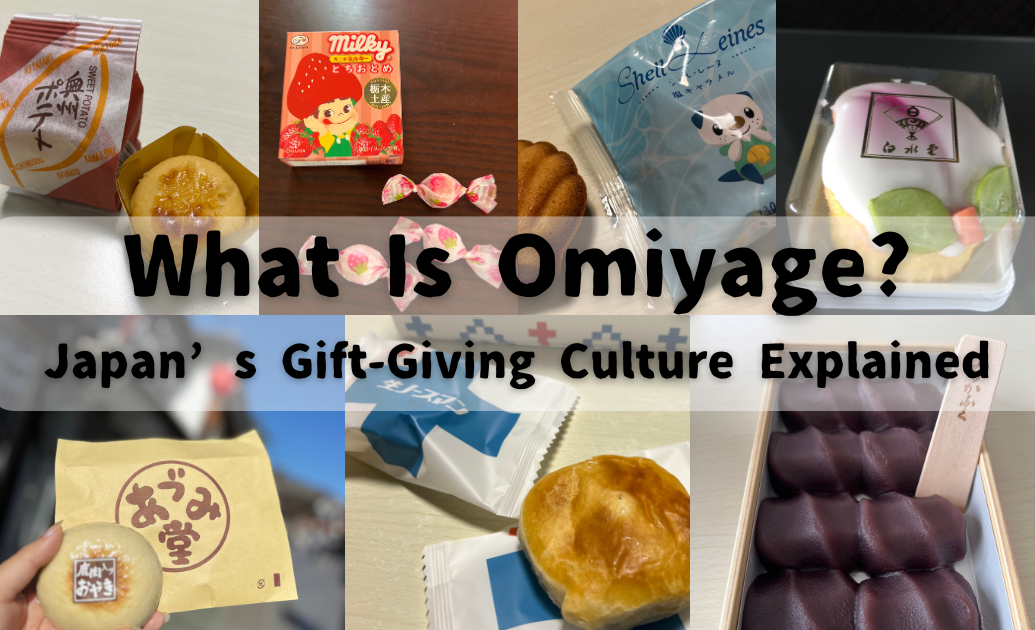
I love traveling—both around Japan and abroad. And no matter where I go, there’s one thing I always buy: souvenirs. Sometimes it’s a local specialty snack, sometimes a classic magnet or keychain.
In Japan, though, souvenirs are more than just something for yourself. They’re part of a cultural tradition called omiyage. Once you understand it, you’ll probably find yourself happily filling your suitcase with gifts too.
So what exactly is omiyage, and why is it such a big deal in Japan?
Where Did Omiyage Come From?
The idea of omiyage goes back to the Edo period (1603–1868), when travel first became popular among ordinary people.
At the time, one of the most important trips was a pilgrimage to Ise Grand Shrine. But traveling was expensive, and for many people, it was a once-in-a-lifetime opportunity. To make it possible, villagers would pool their money and choose one person by lottery to go on behalf of everyone. This system was called “Oise-kō.”
When the traveler returned, they brought back charms and local products for those who stayed behind. Sharing souvenirs from a journey gradually became a custom—and that’s how Japan’s omiyage culture is said to have begun.
Why Do Japanese People Buy Omiyage?
At its heart, omiyage is about thoughtfulness.
Japanese people value sharing good things with family, friends, and coworkers. Bringing back a small gift is a way of saying, “I thought of you while I was away.”
For office workers, omiyage also has a practical role. If you take time off work, bringing back snacks for your coworkers is a polite way to thank them—and to apologize, just a little, for being away.
It’s also a great conversation starter. Hand someone an omiyage, and suddenly you’re chatting about your trip.
What Kind of Omiyage Should You Buy?
If you travel in Japan, you’ll notice that individually wrapped sweets are everywhere—and there’s a reason for that.
Omiyage is often shared with many people, so individually wrapped snacks are easy, clean, and convenient. Cookies, chocolates, and regional sweets are the safest and most popular choices, especially for coworkers.
How Omiyage Supports Local Regions
Japan stretches long from north to south, and every region has its own food culture—and its own souvenirs.
Buying omiyage isn’t just a personal habit; it also helps support local economies. Many famous regional sweets were created specifically as souvenirs and are still closely tied to their hometowns.
Some well-known examples include:
- Shiroi Koibito from Hokkaido
- Hagi no Tsuki from Sendai
- Nama Yatsuhashi from Kyoto
- Castella from Nagasaki
If you travel around Japan, you’ll quickly realize that every place is proud of its local omiyage.
Buying Omiyage in Tokyo
Tokyo is a bit tricky when it comes to souvenirs.
Traditional items like kaminari-okoshi or ningyo-yaki still exist, but they’re no longer especially popular. One classic that has survived is Tokyo Banana, which remains a safe and familiar choice.
That said, Tokyo is constantly releasing new souvenir sweets. There are so many options that it’s hard to name just one definitive “Tokyo omiyage.” In a way, this perfectly shows how deeply omiyage culture is rooted in Japan.
Luckily, most of them taste pretty good—so in the end, it really comes down to personal preference.
Try Omiyage Culture for Yourself
Omiyage isn’t about expensive gifts. It’s about sharing, consideration, and connection.
When you travel in Japan, don’t stress—just enjoy choosing small gifts for the people waiting for you back home. You might be surprised how fun it is, and how much it helps you feel closer to Japanese culture.
And who knows? You may end up liking the idea of omiyage so much that you keep the habit long after your trip is over.