
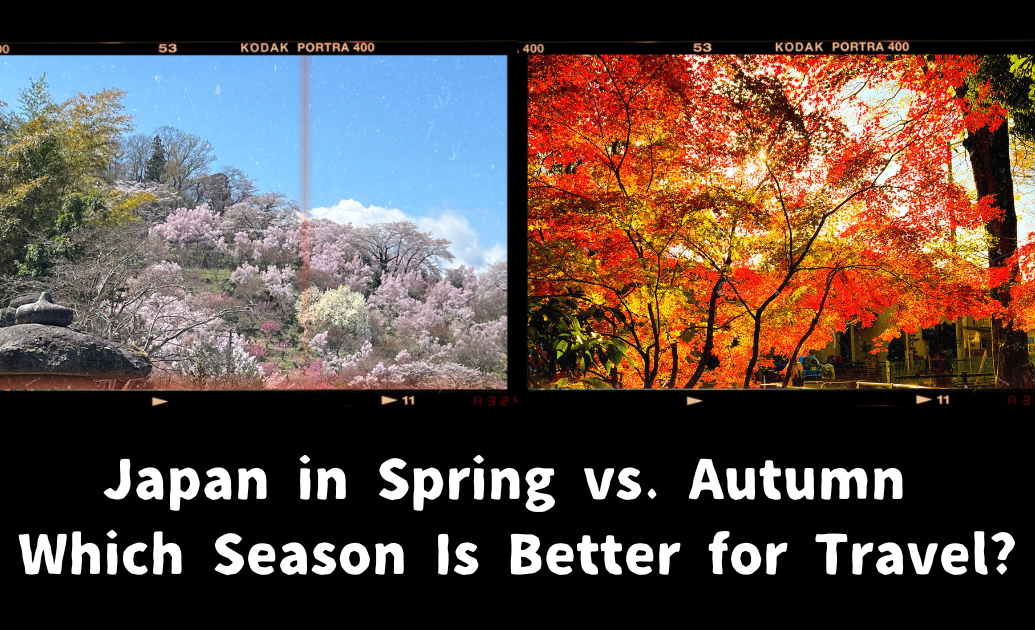
Spring and autumn are both excellent seasons to visit Japan, but they offer very different experiences.
Spring is ideal if you want cherry blossoms, mild weather, and a classic first-time Japan experience. Autumn is a great choice for colorful foliage, comfortable temperatures, and generally fewer crowds around the most popular sights.
If you can’t decide, use the comparison below to see which season fits your trip better.
Spring vs Autumn in Japan at a Glance
| 🌸 Spring | 🍁 Autumn | |
| Months | March – May | September – November |
| Weather | mild, gradually warmer | mild, gradually cooler |
| Main attraction | Cherry blossoms | Autumn foliage |
| Crowds | Very high during cherry blossom season | High during peak foliage |
| Scenery | Pink/green | Red/orange/yellow |
| Prices | Can be high around sakura season | Can rise during peak foliage |
| Rain | Variable | Generally comfortable |
| Best for | First-time visitors, sakura | Foliage, hiking, photography |
| Main downside | Crowds & unpredictable blossom timing | Foliage timing varies by region |
Planning your Japan trip?
Check hotels and activities before booking, especially if you’re traveling during cherry blossom or autumn foliage season.
Visiting Japan in Spring🌸
What is spring like in Japan?
Spring is one of the most popular times to visit Japan, but there is more to spring than cherry blossoms.
One of the unique things about traveling in Japan during spring is that you can sometimes enjoy both winter and spring scenery on the same trip. In higher-altitude areas, snow may still remain while flowers are beginning to bloom at lower elevations.
A great example is Japan’s famous snow corridors, where massive walls of snow are cleared from mountain roads in spring. They are only accessible for a limited period each year.
Spring is also a great season for sightseeing in general. The weather gradually becomes more comfortable, and gardens, parks, and streets begin to turn green after the long winter.
Cherry blossom season
For many travelers, cherry blossoms are one of the main reasons to visit Japan in spring. Even people living in Japan look forward to sakura season every year.
During the peak season, parks, riversides, temples, and city streets are covered in pale pink blossoms, creating a special atmosphere that is difficult to experience anywhere else.
However, cherry blossom season is relatively short, and the timing depends on the weather and location.
As a general guide:
- Tokyo, Kyoto, and Osaka: Late March to early April
- Tohoku: Around mid to late April
- Hokkaido: Around late April to early May
The exact dates can vary from year to year, so it is worth checking the latest forecast if cherry blossoms are one of your main reasons for visiting.
Spring weather
Spring weather in Japan changes considerably from March to May.
March can be unpredictable. Temperatures gradually become milder, but cold days are still possible, especially in the morning and evening. Snow can also occur in some areas.
April is generally mild and comfortable for sightseeing, although temperatures can still vary from day to day.
May is usually warm and pleasant. By late May, however, temperatures can start to feel more like summer, especially in cities such as Tokyo and Osaka.
If you are traveling during spring, dressing in layers is a good idea because temperatures can change throughout the day.
Spring crowds and prices
Spring can be a very busy season, especially during cherry blossom season.
Another particularly busy period is Golden Week, which usually falls from late April to the first week of May. During this holiday period, hotels can fill up quickly, prices may increase, and popular sightseeing spots can become extremely crowded.
If you want to enjoy pleasant weather while avoiding the biggest crowds, traveling just before or after the peak periods can be worth considering.
What to do in Japan in spring
Spring is a great season for almost any type of trip.
Even if you arrive too early or too late for the main cherry blossom season, you may still find early- or late-blooming varieties depending on where you travel.
And once the cherry blossoms are gone, Japan does not suddenly lose its spring beauty. Fresh green leaves, colorful flowers, and newly green gardens create a completely different atmosphere.
So don’t feel that your trip has to revolve entirely around sakura. There is plenty to enjoy throughout the season.
Planning a Spring Trip to Japan?
Spring is one of the most popular times to visit Japan, so hotels can fill up quickly—especially during cherry blossom season.
Check hotels in Japan on Trip.com →Tokyo/Kyoto
Visiting Japan in Autumn🍁
What is autumn like in Japan
Autumn in Japan is a gradual transition from summer to cooler, more comfortable weather.
September can still feel like summer, with hot and humid days, especially in major cities. As the season progresses, temperatures gradually become milder.
By October and November, many parts of Japan become ideal for sightseeing, with comfortable temperatures and beautiful autumn scenery.
Autumn is also an excellent season for food. There is a Japanese expression, “shokuyoku no aki,” or “autumn appetite,” reflecting the abundance of seasonal foods available during the harvest season.
If you enjoy food as much as sightseeing, autumn can be a particularly enjoyable time to visit Japan.
When do autumn leaves appear?
The timing of autumn foliage varies greatly depending on location and elevation.
The leaves usually begin changing color in higher and colder areas, then gradually move southward and toward lower elevations.
For example, autumn colors can appear in the mountains of Hokkaido as early as September, followed by areas of Tohoku and then the Kanto region.
Popular destinations such as Nikko can reach their peak around late October, while Kyoto is generally at its best later in the season, often around late November to early December.
The exact timing changes from year to year, so if autumn foliage is your main reason for visiting, check the seasonal forecast before planning your itinerary.
Autumn weather
September can still bring days that feel like midsummer.
September and October are also part of Japan’s typhoon season, so heavy rain and strong winds can occasionally affect transportation and sightseeing plans.
As autumn progresses, the weather generally becomes cooler and more comfortable. October and November are often excellent months for walking around cities, visiting temples and gardens, and exploring the countryside.
Autumn crowds and prices
Autumn can also become very busy during the peak foliage season.
However, the timing of the peak depends on the destination. For example:
- Nikko: Around late October
- Kyoto: Around late November
Hotels and transportation can become more expensive during popular foliage periods, particularly on weekends and holidays.
If you have some flexibility, visiting shortly before or after the peak foliage period can help you avoid some of the biggest crowds.
What to do in Japan in autumn
Like spring, autumn is a great season for almost any kind of trip.
You don’t necessarily have to travel to a famous mountain or autumn foliage destination to enjoy the season. By late November, for example, Tokyo’s street trees and parks can become beautifully colorful.
Autumn is also a fantastic season for food.
Seasonal favorites include chestnuts, sweet potatoes, Pacific saury, and mushrooms, among many others. If you enjoy Japanese food, autumn can be a great time to plan a trip around seasonal specialties as well as sightseeing.
Planning an Autumn Trip to Japan?
Autumn is another popular travel season, especially around the fall foliage season in Kyoto, Tokyo, and other major destinations.
Check hotels in Japan on Trip.com →Kyoto/Tokyo
Spring vs Autumn: Weather Comparison
| Spring🌸 | Autumn🍁 | |
| Main months | March–May | September–November |
| Weather | Gradually warmer | Gradually cooler |
| Early season | Can still be cold | Can still be very hot |
| Main scenery | Cherry blossoms, fresh greenery | Autumn foliage |
| Rain/weather concerns | Changeable spring weather | Typhoons, especially Sep–Oct |
| Best-known seasonal experience | Cherry blossoms | Autumn leaves |
| Seasonal food | Spring vegetables, strawberries, etc. | Chestnuts, sweet potatoes, mushrooms, Pacific saury, etc. |
Spring vs Autumn: Which Is Less Crowded?
Neither spring nor autumn is crowded throughout the entire season.
The biggest crowds tend to concentrate around the peak cherry blossom period in spring and the peak autumn foliage period in autumn.
If avoiding crowds is important to you, consider traveling outside these peak periods.
- Early spring or late spring: You may be able to avoid the busiest cherry blossom period.
- Early autumn : You may be able to avoid the busiest foliage period, depending on your destination.
Keep in mind that weather and foliage timing vary from year to year, so there is no single date that guarantees low crowds.
Is Japan More Expensive in Spring or Autumn?
Both spring and autumn can become expensive during their respective peak seasons.
Hotels
Hotel prices can rise significantly during cherry blossom and autumn foliage periods. Weekends and Japanese public holidays can also be more expensive than weekdays.
Flights
Airfares can vary considerably depending on demand, dates, and the route. Peak travel periods can be more expensive, so booking early can be helpful if your dates are fixed.
Trains
Train fares generally do not change dramatically simply because it is spring or autumn. Japan’s major rail fares are relatively stable compared with hotel prices and airfares.
However, transportation can feel much busier during peak travel periods.
In short, the biggest price difference is usually accommodation and airfare rather than ordinary train fares.
Which Is Better for You?
| If you want… | Consider |
| See cherry blossoms | Spring |
| See autumn foliage | Autumn |
| Visit during a season with many types of outdoor activities | Both |
| Experience snow and spring scenery together | Spring |
| A classic first Japan trip | Spring |
| Enjoy seasonal autumn food | Autumn |
| Avoid the biggest seasonal crowds | Travel outside the peak periods of either season |
The best choice ultimately depends on your priorities, itinerary, and the regions you want to visit.
And remember: Japan looks completely different from season to season. If you have the chance to visit twice, experiencing both spring and autumn can give you two very different sides of the country.
Ready to Plan Your Japan Trip?
Whether you choose spring or autumn, booking your accommodation early can make a big difference during Japan’s popular travel seasons.