
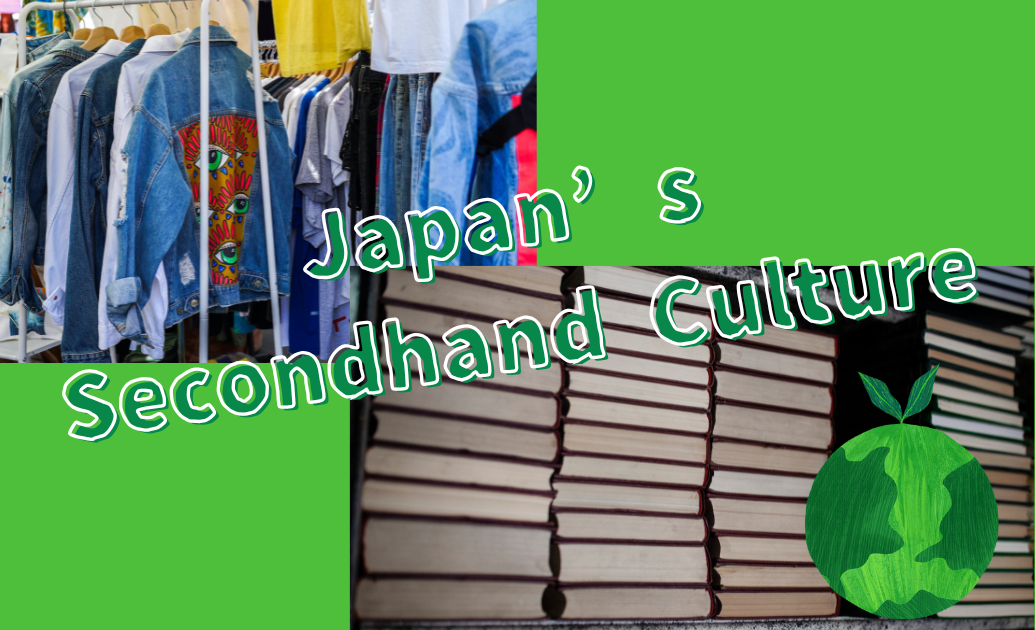
What comes to mind when you hear the word “secondhand”?
Antiques? Eco-friendly shopping? Or perhaps something less positive—like items that might be dirty or poorly maintained?
In Japan, secondhand goods have a very different image. As far back as the Edo period, around 300 years ago, people reused and recycled almost everything, living a lifestyle that produced very little waste. Although much of that culture has sadly disappeared, the Japanese comfort with buying secondhand items may be a legacy of that time.
From a young age, Japanese people are taught to take good care of their belongings. Using things carefully and for a long time is considered a virtue. This mindset is one of the reasons why Japanese secondhand goods are often said to be exceptionally clean and well maintained.
When I buy books, I almost always check whether a used copy is available first. If I’m lucky, I can buy the same book for a fraction of the original price!
I hope this article serves as a friendly introduction to Japan’s secondhand world.
Secondhand Bookstores
One of the most famous secondhand bookstore chains in Japan is Book Off. These stores sell novels, academic books, magazines, and manga, as well as CDs and video games. Larger locations may even carry toys and trading cards.
Visiting Book Off feels a bit like going on a treasure hunt—so take your time and enjoy browsing.
My recommended locations:
- Book Off Akihabara
- Book Off Ikebukuro Sunshine Street
Thrift Stores (Secondhand Clothing)
Japanese thrift stores don’t only sell vintage T-shirts and jeans. Many of them also carry everyday clothing at very affordable prices.
Shimokitazawa is famous as Tokyo’s secondhand fashion district, but in recent years, chain thrift stores have become increasingly popular. One highly recommended chain is Second Street, which has locations all over Japan and offers a wide range of styles and prices.
Flea Markets
Tokyo doesn’t have permanent, regularly scheduled flea markets, but many pop-up flea markets are held as special events in various locations and sizes.
One of the largest and most famous is the Oi Flea Market. If you’re in Tokyo while it’s happening, it’s well worth a visit—you’re sure to find something unique.
Luxury Brand Items
If you want to buy luxury brands like Chanel or Louis Vuitton at a more reasonable price, secondhand is an excellent option in Japan.
High-end items are often treated with great care, so it’s not uncommon to find used luxury goods in remarkably good condition, sometimes with very little sign of wear.
Flea Market Apps
In Japan, flea market apps play a huge role in the secondhand economy. Platforms that allow individuals to buy and sell directly have changed the way people shop.
Some might say that people are less afraid of impulse purchases now—after all, “If I don’t need it, I can just sell it.” Selling items instead of throwing them away helps reduce waste and earn extra money at the same time.
The two biggest flea market apps are Mercari and Rakuma. Both allow purchases from overseas, so even if you can’t visit Japan—or forgot to buy something while you were here—they’re worth checking out.
Enjoy exploring Japan’s cool and unique secondhand culture! ♻️✨