
When you think of a major city, you probably imagine noise, crowds, and a certain level of chaos—and you mentally prepare yourself before visiting. So what about Tokyo, one of the largest cities in the world?
Despite its size and population, many travelers are surprised by how orderly and quiet Tokyo feels. As someone born and raised in Japan, that’s not something I personally notice. But hearing this comment again and again made me stop and think: Why does Japan feel so quiet?
Let’s take a closer look at the reasons behind Japan’s famous calmness.
Why Is Japan So Quiet?
1. Religious and Cultural Roots
Japan’s two major religions—Buddhism and Shinto—both place great value on silence and tranquility.
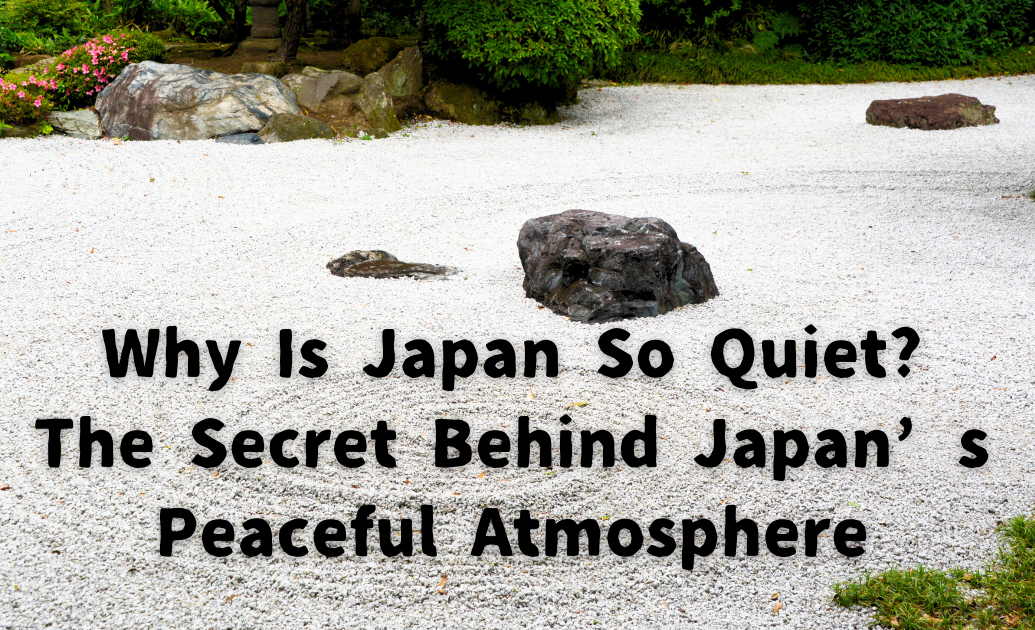
Think of a Zen temple where you hear nothing but the wind and dripping water, a minimalist karesansui (rock garden), or the tea ceremony, where making and drinking a single bowl of tea happens in near silence. Japanese culture has long understood the richness of “nothingness” and has found meaning in silence itself.
This deep cultural background still shapes how people behave in public spaces today.
2. Social Harmony and Unspoken Pressure
From a young age, Japanese people are taught not to cause trouble for others. Acting modestly in public is considered a way to preserve wa—social harmony.
On the flip side, this can also be seen as a form of social pressure, where behavior that disrupts the atmosphere is quietly discouraged. This unspoken rule encourages people to keep their voices down and be mindful of those around them.
3. A Sign of Safety
Another important factor is Japan’s low crime rate.
People don’t feel the need to stay constantly alert or defensive, and this sense of safety naturally creates calmer public spaces. In that sense, Japan’s quietness is also a reflection of how peaceful the country is.
Situations Travelers Should Be Careful About
On Trains
Talking on the phone inside trains is considered bad manners, and you’ll often see signs asking passengers to set their phones to silent mode. That said, quiet conversation is perfectly fine—just avoid loud voices.
On the Roads
Even though Tokyo relies heavily on public transportation, traffic jams still happen. What surprises many visitors is how rarely you hear car horns.
Drivers are expected to be patient and give way to each other, and most people follow this rule. Courtesy, even on the road, contributes to the city’s quiet atmosphere.
But Don’t Worry Too Much
“When in Rome, do as the Romans do.” Of course, I hope travelers respect Japanese manners.
At the same time, I don’t want visitors to feel overly nervous. Japanese etiquette is not something extreme or uniquely difficult—it’s mostly basic courtesy that applies anywhere in the world. Be considerate, observe your surroundings, and you’ll be just fine.