
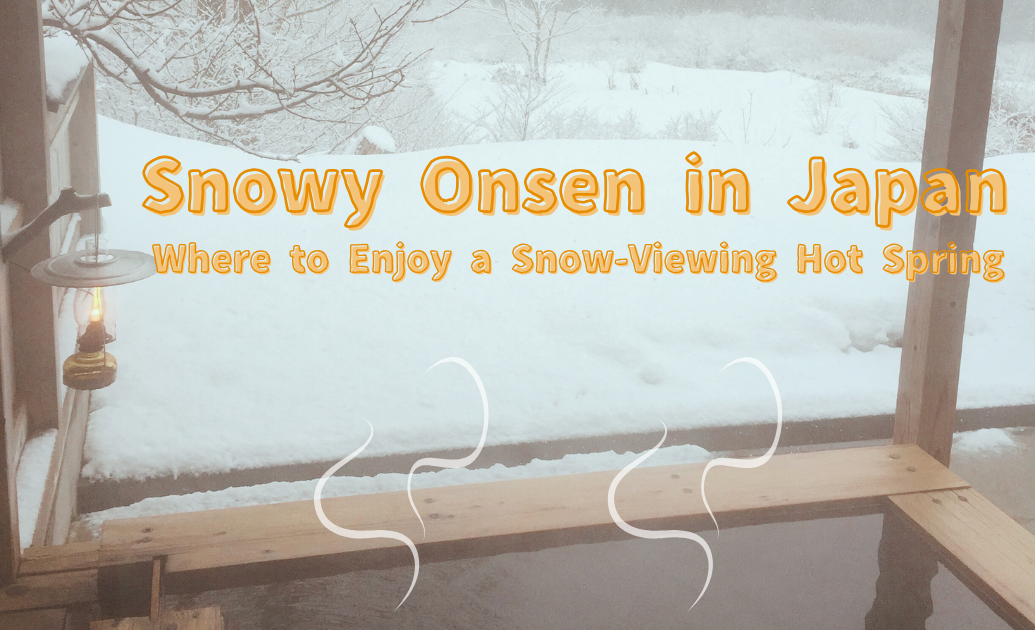
Have you ever imagined soaking in a warm outdoor hot spring while snow quietly falls around you?
For many Japanese people, a snowy onsen is one of the most magical winter experiences in Japan. There is something incredibly relaxing about sitting in steaming hot water while surrounded by a landscape covered in snow.
If you’re visiting Japan in winter, I highly recommend adding a snow-viewing onsen to your itinerary.
In this guide, I’ll introduce some of my favorite places to experience a snowy onsen in Japan, explain when and where to go, and share some tips for choosing the right hot spring—especially if you’re not comfortable bathing naked with other people.
- What Is a Snowy Onsen?
- Best Snowy Onsen Experiences in Japan
- When Is the Best Time to See Snow at a Japanese Onsen?
- How to Choose a Snowy Onsen in Japan
- Don’t Like Bathing Naked with Other People?
- A Few Things to Know Before Visiting a Japanese Onsen
- Final Thoughts: Why You Should Experience a Snowy Onsen
What Is a Snowy Onsen?
A snowy onsen is essentially a Japanese hot spring where you can enjoy the surrounding winter landscape while soaking in the bath.
The most memorable experiences are usually found in mountainous hot spring resorts, where heavy snowfall creates a completely different atmosphere from the cities.
Imagine:
- Snow-covered mountains and forests
- Steam rising from an outdoor bath
- Snow falling around you
- A traditional Japanese inn nearby
- Nothing but the sound of nature
It’s one of those experiences that is difficult to appreciate from photographs alone.
And you don’t necessarily have to visit a famous ski resort to experience it.
In fact, some of the best snowy onsen experiences are in quiet mountain areas where the main attraction is the hot spring itself.
Best Snowy Onsen Experiences in Japan
1. Nyuto Onsen, Akita Prefecture
Nyuto Onsenkyo is probably one of the first places that comes to mind when Japanese people think about a traditional snowy onsen.
Located in Senboku City, Akita Prefecture, Nyuto Onsenkyo is a historic hot spring area at the foot of Mt. Nyuto in Towada-Hachimantai National Park.
The area consists of several traditional hot spring inns scattered throughout a beautiful forested mountain landscape. Each inn has its own atmosphere and its own hot spring source, making the area particularly interesting for onsen lovers.
The combination of traditional wooden buildings, deep snow, and outdoor baths surrounded by nature is almost exactly what many international visitors imagine when they picture a Japanese hot spring.
One of the great things about Nyuto Onsen is that you can enjoy a traditional onsen experience while staying in a relatively remote natural environment.
Tsuru no Yu Onsen
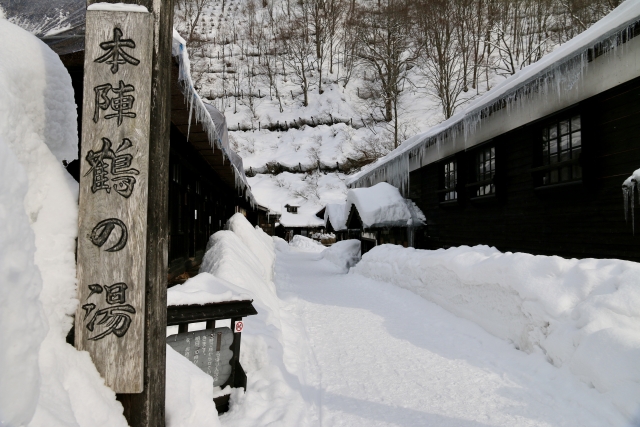
Among the inns in Nyuto Onsenkyo, Tsuru no Yu Onsen is particularly famous.
Its traditional buildings and snowy surroundings create an atmosphere that feels like stepping into another era.
The large outdoor bath surrounded by snow is especially iconic.
However, this is also one of the most popular places in the area, so book as early as possible if you want to stay overnight.
Looking for a place to stay near Nyuto Onsen?
Check available accommodations and compare prices before your trip.
Nyuto Onsen is also accessible without driving, although winter transportation requires some planning. The local Yumeguri-go bus connects the different hot spring areas, with a winter timetable in operation during the snowy season.
Good for: Traditional Japan, nature, photographers, experienced Japan travelers
2. Tokachidake Onsen, Hokkaido
If you want something more remote and dramatic, consider Tokachidake Onsen in Hokkaido.
Located in Kamifurano, Tokachidake Onsen is high in the mountains at an elevation of around 1,280 meters.
The location is one of its biggest attractions.
Rather than being a large resort town, Tokachidake Onsen is a small mountain hot spring area surrounded by nature. In winter, the landscape can become deeply covered in snow.
The journey can be less convenient than visiting a major hot spring town, but that’s also part of the appeal.
Yumoto Ryounkaku
Yumoto Ryounkaku is one of the best-known accommodations at Tokachidake Onsen.
From the outdoor baths, you can enjoy views of the surrounding mountains while soaking in the mineral-rich water.
The contrast between the white snow and the reddish-brown color of the hot spring water creates a particularly striking winter scene.
If your idea of a perfect onsen is quiet, remote, and surrounded by wilderness, this is the kind of place to consider.
Good for: Nature lovers, remote mountain experiences, Hokkaido winter trips
3. Hanamaki Onsenkyo, Iwate Prefecture
Another excellent area for a snowy onsen experience is Hanamaki Onsenkyo in Iwate Prefecture.
The area is known for its collection of hot springs, often referred to as the Hanamaki 12 Hot Springs.
Unlike a single onsen resort, Hanamaki Onsenkyo offers a variety of accommodations and hot spring experiences, ranging from traditional inns to more modern hotels.
This makes it a good option if you want to enjoy a snowy onsen without staying in an extremely remote mountain location.
Planning to stay in Hanamaki?
Compare hotels and ryokan in the area before booking.
Osawa Onsen
One of the most interesting places in the area is Osawa Onsen, a historic hot spring along the Toyosawa River.
The resort has a long history and several different baths, each with its own character.
One of its best-known baths, Osawa no Yu, is located right beside the river. In winter, the surrounding landscape becomes particularly atmospheric.
Osawa Onsen also offers a mixture of traditional and modern accommodation styles, including its historic Toujiya building, which has traditionally been used for longer hot spring stays.
For travelers interested in experiencing a more old-fashioned side of Japanese onsen culture, it’s an especially interesting choice.
There are also shuttle buses connecting the Hanamaki Onsen area with Hanamaki and Shin-Hanamaki stations, although reservations and schedules can vary, so check the latest information before your trip.
Good for: Traditional onsen culture, different accommodation styles, travelers without a car
When Is the Best Time to See Snow at a Japanese Onsen?
If your main goal is to experience a snowy outdoor onsen, January and February are generally the safest months to plan around.
However, snowfall varies considerably depending on the region and year.
Areas with heavy snowfall include:
- Hokkaido
- Inland Tohoku
- Niigata
- Nagano
- Mountainous areas of other regions
The higher the elevation, the longer the snow season tends to last.
For example, a mountain onsen in Hokkaido may have a very different snow season from a hot spring town at a lower elevation in central Japan.
If seeing snow is a major reason for your trip, don’t simply choose an onsen because it is located in a “snowy region.”
Check recent snowfall conditions and the accommodation’s winter information before booking.
How to Choose a Snowy Onsen in Japan
There are a few things I recommend checking before you book.
1. Look for an outdoor bath
This sounds obvious, but not every onsen has an outdoor bath.
If your dream is to sit in hot water while looking at snow, check specifically whether the accommodation has a rotenburo (open-air bath).
An indoor bath surrounded by snowy windows can still be beautiful, but it isn’t quite the same experience.
2. Consider transportation carefully
Driving on snowy roads can be dangerous, even if you’re an experienced driver.
For international visitors who aren’t used to Japanese winter conditions, I generally recommend choosing a hot spring that can be reached by train and bus or a hotel shuttle.
This is especially important for remote mountain onsens.
You don’t want your relaxing winter getaway to turn into a stressful drive through heavy snow.
3. Don’t automatically choose a major ski resort
If your main purpose is skiing, a ski resort can be a great choice.
But if your main purpose is onsen, you may want to look beyond the major ski destinations.
Some of the most atmospheric snowy hot springs are located in quiet mountain communities where there isn’t much else to do.
And honestly, that’s part of the charm.
You can spend your day traveling, checking into your ryokan, soaking in the hot spring, eating dinner, and doing absolutely nothing afterward.
That’s not a bad winter vacation.
Don’t Like Bathing Naked with Other People?
Here’s something international visitors often worry about when visiting Japan.
At a traditional Japanese public onsen, you normally bathe without clothes and share the bathing area with other guests.
For some people, this is a fascinating part of Japanese culture.
For others, the idea of being naked around strangers is a definite no.
If you’re in the second group, don’t worry.
You can still enjoy a snowy onsen experience.
There are two options I recommend.
Option 1: Book a Room with a Private Open-Air Bath
The easiest option is to book a room with a private open-air bath.
This allows you to enjoy the hot spring completely on your own, without worrying about other guests.
And if there is snow outside, you can enjoy your own private snowy onsen experience.
Miyakowasure, Akita
Miyakowasure is a small hot spring inn in the mountains of Akita Prefecture, near Kakunodate.
The inn has only a small number of rooms, and rooms with private outdoor hot spring baths are available.
Its location makes it particularly appealing for travelers looking for a quiet, intimate experience surrounded by nature.
During winter, transportation can be affected by snow, so check the accommodation’s latest access information and shuttle arrangements when making your reservation.
Good for: Couples, solo travelers who want privacy, travelers uncomfortable with communal bathing
Looking for a private onsen experience in Akita?
Check accommodation options and availability before your trip.
Option 2: Reserve a Private Bath
You don’t necessarily need to pay for a room with a private outdoor bath.
Many Japanese hot spring accommodations offer private baths that you can reserve or use for a limited period of time.
These are sometimes called:
- Kashikiri-buro (private bath)
- Kazoku-buro (family bath)
- Private onsen
The exact system varies from one accommodation to another.
Some require reservations, some are first-come, first-served, and some charge an additional fee.
The advantage is that you can enjoy a private hot spring without paying the premium for a room with its own outdoor bath.
Yumoto Kissho, Miyagi Prefecture
Naruko Onsen is one of Tohoku’s historic hot spring destinations, with a history stretching back more than 1,000 years.
One of the advantages of Naruko Onsen is that it is relatively easy to access by train, with Naruko-Onsen Station located within the town.
At Yumoto Kissho, guests can use private baths, allowing you to enjoy the experience without entering a communal bathing area.
This is a particularly useful option if you want to experience Japanese onsen culture but aren’t ready to take the plunge into a large public bath.
Good for: First-time onsen visitors, travelers without a car, travelers who want a private bathing experience
Planning a stay in Naruko Onsen?
Compare accommodation options in the area.
A Few Things to Know Before Visiting a Japanese Onsen
Before you head off to a snowy hot spring, there are a few basic rules worth knowing.
You don’t wear a swimsuit in a traditional onsen
In a standard Japanese onsen, you bathe naked.
You wash your body before entering the bath and don’t bring towels into the water.
Tattoos can sometimes be an issue
Tattoo policies vary from one accommodation to another.
Some places allow tattoos, while others may ask guests to cover them or use a private bath.
If you have tattoos, check the policy before booking.
Bring a towel—but keep it out of the bath
You’ll usually need a small towel for washing and a larger towel for drying yourself afterward.
The small towel should not go into the hot spring water.
Take your time
An onsen isn’t a swimming pool.
You don’t need to stay in the water for a long time.
Get out when you feel warm enough, cool down, drink some water, and go back in if you want to.
Final Thoughts: Why You Should Experience a Snowy Onsen
A snowy onsen is more than just a hot bath.
It’s the contrast that makes the experience so special:
hot water and freezing air.
steam and snow.
traditional buildings and quiet forests.
You might spend the day traveling through Japan’s winter landscape, then arrive at a small mountain ryokan, put on a yukata, and step outside into the cold.
A few minutes later, you’re sitting in warm mineral water while snow falls around you.
For me, that’s one of the most beautiful ways to experience winter in Japan.
Whether you choose the historic atmosphere of Nyuto Onsen, the remote mountain setting of Tokachidake Onsen, the traditional atmosphere of Hanamaki Onsenkyo, or a private bath at a smaller ryokan, a snowy onsen can become one of the most memorable experiences of your trip.
So if you’re planning a winter trip to Japan, don’t just look at the snow.
Get in it.
Planning your winter trip to Japan?
Compare accommodations before you book.